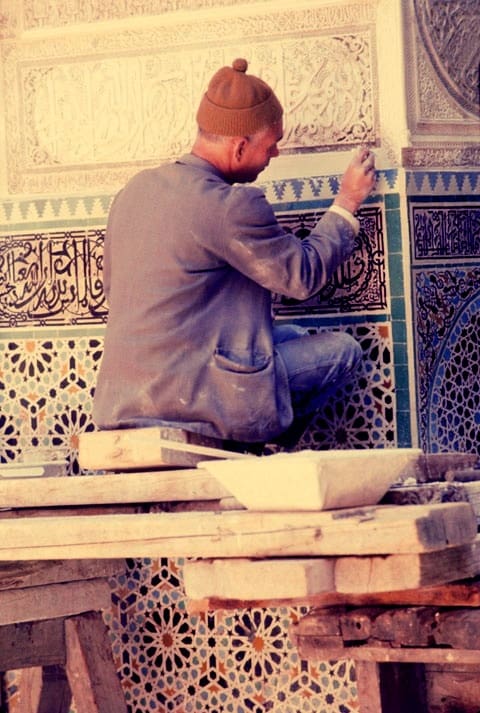
I’m very proud to welcome Mark Kane as our guest blogger this week. Mark is a great friend whom I worked with when I was a Regional Editor for Better Homes & Gardens. At the time he was the Executive Garden Editor there. Now he is the Strategic Editor and “Groundskeeper” for a wonderful site called Your Garden Show, where you can post photos of your own garden and drool over others (be sure to check out Mark’s wonderful blogs there). Mark speaks French from his days in Morocco, where he and his wife were in the Peace Corps. Mark took these photos.
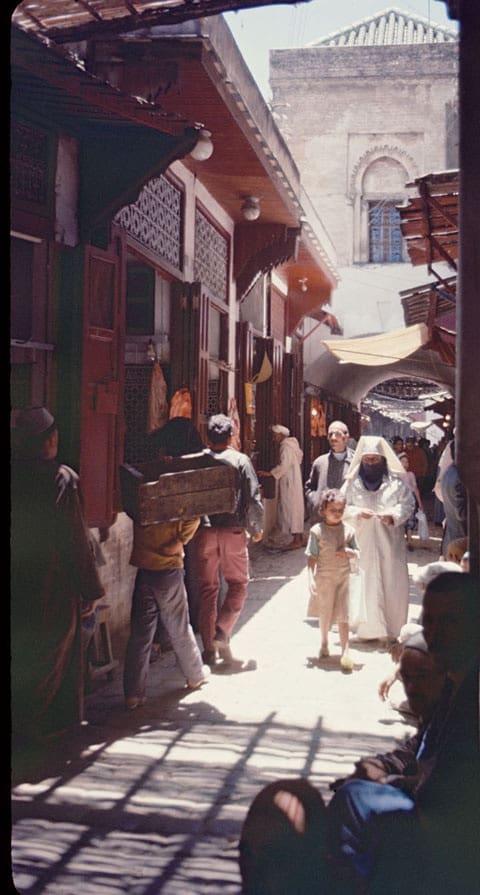
When we joined the Peace Corps long, long ago and arrived in Fes, Morocco, Loulou and I were not cooks. The first year, we ate eggs and pan-fried, gristly biftecs. Ugh. Then we discovered “Fes
 Vu par Sa Cuisine,’ a cookbook and love letter written by the passionate Madame Zette Guinaudeau.
Her Fes and ours was still a medieval city. Her view of its refined cuisine is the main reason to read the book, still to be found at Internet booksellers. If you don’t come away longing to cook tagines, couscous and bstilla (the sumptuous pigeon pie, encased in filo and dusted with powdered sugar and cinnamon) you might be afflicted with an excess of rationality.
Loulou and I embarked on cooking everything in the book. We fell short on making our own preserved lemons and smen, a butter stored so long in crocks that it turns cheeselike or stronger in taste, not to mention khli, strips of meat preserved in the same crocks and served fried with bread for breakfast.
But we learned to make tagines with rough cuts of lamb that turned into melting shreds of succulence bathed in a reduction that was almost pure olive oil and rendered lamb fat and spices, mainly cumin, ginger, minced parsley and minced cilantro.

Here’s where a cookbook traditionally gives a recipe, with quantities and directions. Not Madame Guinaudeau. For most dishes, you’re on your own. But try this:
RECIPE: Tagine with Lamb and Prunes, Tagine b’el berqouq
 Mark’s thoughts about the perfect tagine: “The main point about cooking a tagine is low heat. Ideally, the meat cooks to succulence at about the same time the moisture and the rendered juices and the bit of water in the pot at the start all turn to steam and escape, leaving the rendered sauce as pure oil, rendered fat, and spices. It’s about timing and heat.”
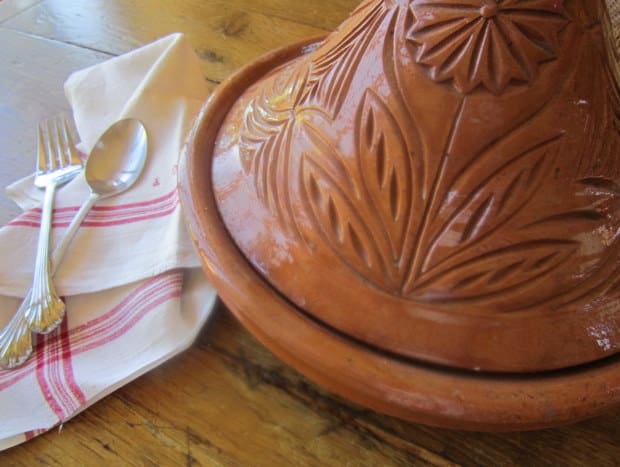
Photo: Nicole’s antique tagine pot makes a great presentation. She spent part of her childhood in Morocco.
1 lb of lamb shoulder
1/4 cup of water
1/4 cup of strong olive oil (Mme. Guinaudeau rhapsodized about olive oil that would racler la gorge–meaning “scrape the throat.” A bit over the top, maybe.)
one diced onion
2 tsps powdered cumin
2 tsps powdered ginger
1 tsp powdered turmeric
Salt, two pinches
parsley, one-half bunch, snipped
cilantro, one half bunc, snipped
6 pitted prunes
Salt
Cook all at very low heat. Add cilantro near the end. In Fes a tagine is cooked in a ceramic pot (called a tagine) made of two parts, a shallow bowl and a cone-shaped top. The fire is very low, furnished by bits of charcoal in a tiny brazier.
To approximate this with Western gear is difficult. You need a heavy cast iron pot with a very tight domed lid to hold in the steam and prolong the persistence of the water. You need a burner you can keep so low that the pot barely simmers or remains just short of simmering. Cook for about two hours, then remove the meat and prunes to a warm dish and turn up the heat to boil off any remaining water. Pour the reduction over the meat and prunes, serve with chewy bread and eat in small bites with morsels of bread dipped in the reduction.
Note: Searing the meat beforehand is optional. Mark doesn’t, some recipes do.












9 thoughts on “A French Connection: Cooking Memories from Morocco”
LOVE this Mark and Lynn! I actually was going to order a Tangine from Nigella Lawson’s online shop, also available on Amazon.com. Now I will! I have become a major fan of Middle Eastern food. The spices are so amazing. Now I want to go to Morocco! Thanks for a few minutes of fabulous fantasy.
CAN’T WAIT TO TRY IT… How can I duplicate a Tagine???
The traditional ceramic tagine, with its shallow bottom and cone-shaped lid had two aims, to allow even distribution of very low heat (after the bottom heated up to the more or less the same temperature everywhere) and trapping the steam from the simmering sauce and returning it to the sauce as condensation, to prolong the simmering until the meat was succulent, almost dissolving. To approximate this with Western gear I’ve used for years a Le Creuset pot. It’s cast iron and enamel with a slightly domed lid that, being heavy enough to stay put, allows very little steam to escape, thus prolonging the simmering about as well as a traditional ceramic tagine. When the tagine is ready, you have to remove it and arrange the solid bits on a warmed serving plate, then cover with the reduction.
By the way, the traditional ceramic tagine is not high-fired and not burner or oven-proof. It is meant only for low heat from a modest source, like a tiny brazier. These days there are iron and enamel vessels in the traditional shape and many variations of material, findable on the Internet. Try googling “tagine ceramic.”
B’ism Allah.
My father was in Morocco during WW2, and always talked about the great food there, especially the bread. You have a photo of the bread, but do you know its name and where in the USA one might buy it?
Wonderful photos (and recipe)! The first photo could be a 19th cent. orientalist painting. I have similar photos from my years in the Yemen, and lots of drawings.
Tom and Lisa will be back in Italy in November. When are you coming to visit???
Pat Smith (Otricoli)
It’s possible to mimic a tagine with a Le Creuset cast iron casserole. They also sell tagines but the casserole works just fine. I cook it at 300 degrees in the oven for a few hours.
Hi Mark,
Thanks for your guest blog.
I loved your photographs.
They reminded me my childhood which was spent there in the 50ies/60ies.
It was such a wonderful country. Some places still are but others like Marrakech and the South have become far too touristy now and have lost their charm.
Of course tajine is something I grew up with and still cook quite often. There are endless recipes. All delicious. My husband particularly loves Chicken with tomatoes and honey.
If you ever come to Burgundy I’ll be glad to share memories.
Though bread looked the same all over Morocco–a round loaf an inch or two thick with a raised center–the texture and taste varied from household to household, largely because every family had its own tiny plot of land and its handed-down variety of wheat. I have a feeling that now instead of hundreds of wheat varieties Morocco has adopted the hybrid varieties that are bred for qualities besides subtle variations in taste–such as toughness, disease resistance and high yields. I still bread Moroccan style but it lacks the savor of the breads I remember in Fes. I combine one part whole wheat flour and three parts unbleached white flour, knead three times, let rise three times and bake in pre-warmed 350 degree oven with some steam in the air to keep the crust from hardening and halting the rising of the loaf. The bread becomes a kind of utensil when you eat a tagine, you tear off bits of bread and use them to gather a morsel of meat, veggies, dried fruit, then dab all in the reduction sauce. Done artfully, this style of collecting bites of dinner leaves your fingers and mouth free of grease. It might look unhygienic when seven people are dabbing in the same ceramic platter but the opposite is true. Fingers never touch mouth. Oh, I could go on but unless you’re dining with royalty in Rabat you don’t need to master the technique. By the way, the word for bread in morocco is Khubz but I don’t think that will help you find a loaf in the U.S. unless you have a Moroccan restaurant nearby.
NIcole, the universe of tagines in Morocco is vast, as you note. there are a few relatively modern cookbooks by Moroccans that hint at the variety. In the end a tagine is a forgiving dish and you can try all sort of combinations–root vegetables and lamb with dried fruits and honey, chicken with olives and preserved lemons and toasted almonds, on and on.Friends of Morocco, an organization of people who were Peace Corps volunteers in Morocco, has a lot of recipes here: http://friendsofmorocco.org/Food/recipes.htm