

The French are organized, and thrifty. After all, they invented the phrase we've borrowed, mise en place, meaning you gather everything together before you even begin to cook, all accessible, prepped, and at the ready. And they're good at not wasting things. From tools to household goods to food, they repurpose, re-use, re-cycle, and when they cook, they use every morsel of animal or vegetable (unnerving as it may be, encountering a giant beef tongue or some animal head in the butcher shop). Throwing something away is just not an option for the French.
I thought about that this week when I read an article about food waste in the US. We waste a whopping 50% of the vegetables we produce, a world record. Yowsa! This would feed whole countries! So it's time to rethink those leftovers bits in the fridge, and do our part.
We've blogged about this before. At the end of the week, I gather up those leftover market veggies and/or bits of meat and make soup. But let's go further, and make a dent in that 50%.
First of all—maybe stop peeling vegetables? An awful lot of the nutrients in veggies are in the peel, AND most of the fiber, so why peel unless you have to? Carrots, potatoes, cucumbers all can be eaten au nature. Even in avocados, most of the nutrients are concentrated near the skin, so peel them instead of scooping them out with a spoon.
Next, let's think beyond soup, for using up leftovers. Francis Lam has a great idea which I'm adopting: pre-prepped grain bowls. Here's the trick: every week-end he roasts a bunch of veggies, including leftover dribs and drabs (don't forget that onion that's starting to sprout, and some garlic cloves), and pops them in the fridge. During the week, he makes a grain bowl and tops it with the veggies, eggs, and maybe some leftover meat or fish, plus a yummy sauce (he's partial to a lemon-herb buttermilk dressing). A couple of busy week-nights, sorted!
But there's more you could do with those roasted veggies. Make a big dinner salad, or a pasta primavera. Fold them in to a frittata or a casserole. Make a tart or a pizza. Or go all-out-French, with a cheese and veggie soufflé.
And of course there's stock! Nothing like a good homemade stock to use up leftover vegetables, bones, meat, alums, mushrooms, and that limp celery you were going to toss. Which brings us full circle, back to our soup, made even more delicious with our fragrant stock.
It may help to make one day a week into a food recycling day (i.e., cleaning out the fridge, and cooking what's left). I do mine before I reload on market day.
I'm sure our readers would like more tips–how are you addressing this problem? Do share!

RECIPE: How to Roast Most Any Vegetable
Roasting caramelizes the sugars in vegetables and browns them up, and if they're past their prime you'll hardly notice. There are not many vegetables you can't roast. It's a super easy way to cook and to add flavor, but there are a few things to know:
Cut them into chunks (be sure they are washed and well dried) and put them on a sheet pan. Of course the smaller they are cut, the faster they will cook. Drizzle them with a tablespoon or two of oil, just to coat; any oil will do, but I use a mild tasting olive oil. No need to get a bowl dirty; just toss them with your hands right on the pan. Sprinkle them generously with coarse salt and pepper, and other dried herbs if you wish. Important: they shouldn't touch in the pan, spread them out. Otherwise they will just steam. They should all be roughly the same size. I roast them at about 450 (220C), but you can slow roast them as well, e.g. if you have something else in the oven.
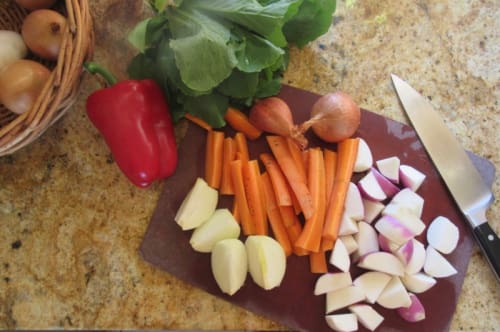
You can roast different vegetables together, just check them frequently for doneness, as different veggies have different cooking times. I tend to cut mine in large chunks, but I have a friend who cuts a bunch of different veggies in a half-inch dice, roasts them all together, and serves them just like that, and they're delicious.
Cook them until they brown. You need the charred bits, for flavor. Even if they're tender with no char, keep cooking them until they brown up a bit, they will be fine. If they're done and not browning, I crank up the heat.
I like to roast vegetables for soups. For example, I roast winter squashes with onion quarters before I finish them off with stock on top of the stove, and blend them into a velvety soup.

Roasting tomatoes before you add the to sauces makes them tastier, or they're good on their own.
If you serve roasted veggies on their own as a side dish, shower them with fresh herbs for a bright finish, and/or sprinkle with some fresh grated parmesan. Serve them over orzo or lettuce with a vinaigrette, and you've got a substantial salad or side. Or, put an egg on it, and call it lunch!

Here's a good chart from the Kitchn blog, to give you an idea about times:
General Roasting Times for Vegetables
Cooking times are for roasting vegetables at 425°F.
- Root vegetables (beets, potatoes, carrots): 30 to 45 minutes, depending on how small you cut them
- Winter squash (butternut squash, acorn squash): 20 to 60 minutes, depending on how small you cut them
- Crucifers (broccoli, cauliflower, Brussels sprouts): 15 to 25 minutes
- Soft vegetables (zucchini, summer squash, bell peppers): 10 to 20 minutes
- Thin vegetables (asparagus, green beans): 10 to 20 minutes
- Onions: 30 to 45 minutes, depending on how crispy you like them
- Tomatoes: 15 to 20 minutes
In the COMMENTS: Suzanne asks about pie crusts for those strawberry tarts. A regular crust will work fine, as will puff pastry, which the French call pâte feuilletée. Suzanne also sends a recipe for a luscious strawberry cream cake, which you can find at this site. Ellen, you are right, leftover strawberry shortcake is best, because what can beat cake marinated in berries? Natalia passes on the recipe for the delicious and oddly named Eaton Mess, perfect for summer berries. For anyone who shares my inability to make meringues, Mary James (of Mary James Dishes it Out) has come to the rescue. OK, I will try again! Debby, let us know how that olive oil and roasted strawberry cake turns out, very creative. Meanwhile, I've already made Connie's orange cream to put on top of strawberry parfaits, and it was great.
Favorite READS: Those serious about changing our troubled world, and who are up for a serious read, will want to check out the new book by our dear friend John Alderdice, Faith and Modernity. John and his wife Joan have a second home near us. John, who is from Northern Irelanad and is a member of the House of Lords, has spent much of his career as an international peace-keeper, consulting with governments. He's a big believer in dialog as a problem-solver, even when there is a wide chasm of beliefs between parties. Hence the subject of this book of essays, a conversation between Muslims and Christians, surely a book for our times.

Also I can't wait to read Natalia's recommended novel, From a Paris Balcony by Ella Carey, which traces the lives of two women over a long period. And if you like this one, Carey has written other novels with a Paris connection.
















10 thoughts on ““Mise en Place”, and Beyond”
Great post!
I love your ideas on roasting vegetables, and I’m going to explore the grain bowl for sure. I get deliveries from local farms, and one way I avoid wasting food is to share it with my neighbors. When it looks like I’m not going to be chopping up that cucumber, or the bananas aren’t going to be eaten, I give them to the elderly couple next door. They appreciate the fresh produce, and I don’t feel guilty for letting it go to waste.
Roasting…one of my favorite ways to cook veggies. Multiple veggies at one time. Whatever I’m roasting, I always include a large onion…preferably a Vidalia Onion. I drizzle with olive oil and sprinkle with salt, pepper and herbes de Provence. Voila! Ready to pop in the oven. As the Barefoot Contessa always says…”how easy is that?”. The bonus – having to clean up one pan is far better than cleaning two or three.
BTW…I’ve made your petite gateaux many times since you put it on your blog and they are always a huge hit. Thanks again for passing that recipe along!
Thanks, Lynn, for all the tips on roasting veggies. I most often just do potatoes, usually tiny reds, unpeeled, and season with fresh herbs or Herbes De Provence dried, or Bell’s Seasoning, which adds a savory sagey flavor. Sometimes I turn the potatoes into potato salad, just adding mayo and whatever other veggies I have on hand. Good with a few cherry or grape tomatoes.
With regard to not peeling vegetables, that is fine if you are using bio veg.
Carrots especially store chemicals just under the skin and should be peeled if you are not sure of the source.
There is very little waste here in Trivy.
Great article, Lynn. We use a lot of brown rice to make leftovers. Whatever you ate last night will probably be a good lunch today in a rice bowl. Also, at the end of the week everything left gets roasted and eaten. I grow many of my vegetables and just can’t stand to see an of them go to waste.
Lynn.my mouth started watering after reading about how you turn your roasted vegetables into a creamy soup.I make this often;it is a favorite in our home,especially because of how easy it is and how really delicious.Also totally relate to not having wasted food! We are so blessed in this country–France,as well–for the gift of abundance.
Love the picture at the top of your post!How creative and pretty!!
Hi Lynn,
I love it, great ideas!!! Just a few things we say “au naturel” or “nature”. I agree that if you do not have organic vegetables you should peel them because pesticides are under the skins and washing does not remove enough of the pesticides. So if you buy organic you could peel your veggies and put the peelings in a big ziploc bag and freeze them. When the bag gets full you can make vegetable broth and use it for soups. I do the same with meat bones and make chicken broth or beef broth or fish broth for bouillabaisse. Quiches are a great way to use fridge leftovers too.
I hate to waste food. Do not throw away dry bread! You could use it as French Toast or grate it for bread crumbs. My mom used to say ” if you throw bread away that means you do not know how to earn it.” In French earning one’s bread is having a good salary.
Be creative, reuse, recycle!
Lynn, I cannot cook without leftovers–my lamb turns into curry, my chicken into salad, my beet juice into the most incredible soup or I poach my salmon in it, an amazing taste for any fish you poach or even poached eggs in beet juice for Valentine’s Day breakfast! I have an article on this I will send you written for The American Magazine in Italy.
If you would like the article, feel free to use any of it you wish. It’s my copyright.
I love the “all of the pig but the oink and all of the duck but the quack” philosophy of cooking. My freezer is full of chicken bones and shrimp shells just waiting their turn. You know, of course, that at my house it’s all “andthenmakesoup”! 😊👍
Sunday night is pizza night and the left over combinations on a pizza crust have been quite interesting over the years. My favorite was JimmyDean sausage with peaches. No it was not for dessert, and yes it was delicious!
Here’e to being conscientious about “les restes”